The Real Benefits of Using Trekking Poles
From uneven paths to long descents, here is what trekking poles can add to a walk, when they help most, and how to decide if they are right for you.
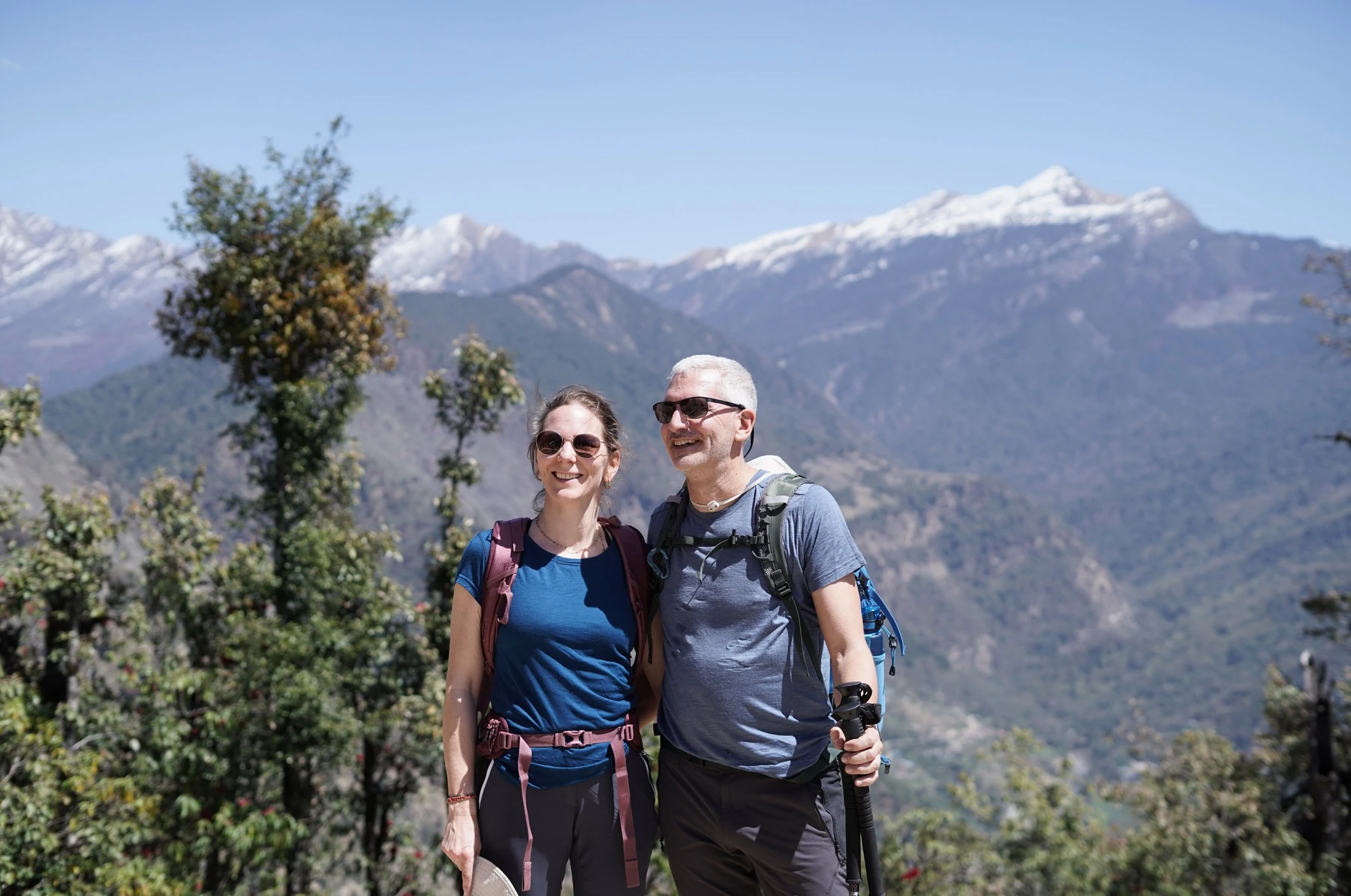
You may feel perfectly comfortable on the first mile of a walk, then meet a loose descent and start choosing every step more carefully. That is often when trekking poles make sense. They give your hands a useful role and offer extra points of contact with the ground while you keep moving at your own pace.
The best reason to carry poles is personal: they make a particular part of your walk feel better. For some people, that is a steadier step over roots. For others, it is a more controlled descent or a rhythm that helps on a long climb. You do not need a difficult expedition to notice the difference, and you do not need to use them for every step.
More confidence when the ground changes
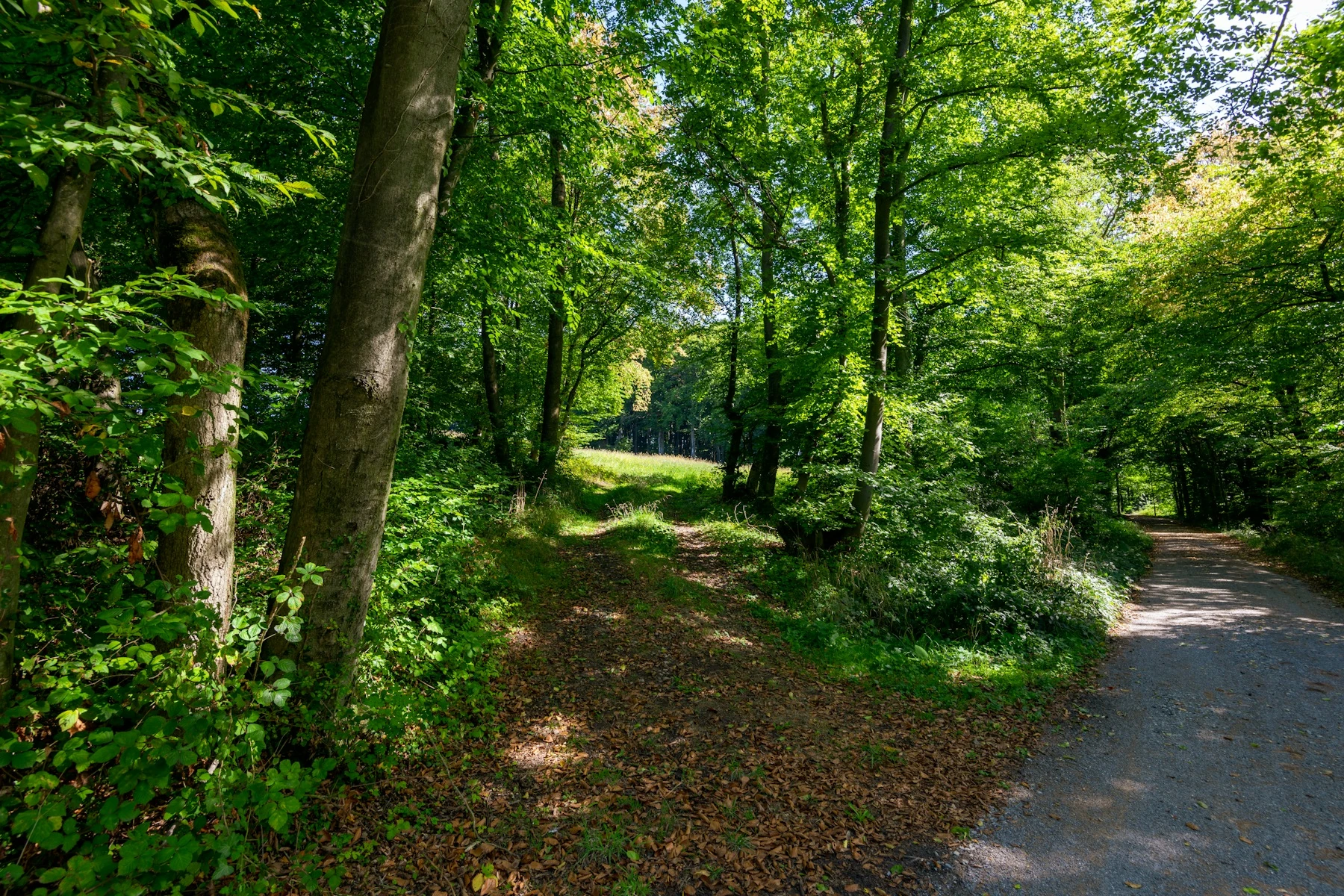
Think about a path with scattered stones, shallow ruts, or damp leaves. Before stepping onto an uncertain patch, you can place a pole on firm ground and feel where it lands. That extra contact may make it easier to take your time and choose your next foothold. If you carry a daypack, two poles can also help you feel more settled when you stop or change direction.
This is a practical advantage, not a promise that you cannot fall. A small balance study found that young adults maintained balance longer on a test platform while using two hiking sticks. A platform test is different from a rocky trail, and the study did not measure falls in older hikers. Good footwear, attention to the route, and a pace that suits the ground still matter.
Use a pole as an extra contact, not as a handrail. Plant the tip where it will hold, keep your weight mainly over your feet, and avoid trusting a pole that is sliding on smooth rock or loose gravel.
A more controlled way down
The descent is often where a pair of poles earns its place. Each step downhill asks your legs to slow your body. With a pole planted slightly ahead of you, your arms can share part of that work while you step down. You may find that you can keep a more comfortable rhythm instead of rushing to the bottom.
In a downhill walking study, 15 experienced male hikers showed lower measures of loading around the lower-limb joints when they used poles, whether they carried no pack, a daypack, or a heavier pack. That is useful evidence for what poles can do, but it is not a guarantee of pain relief or injury prevention for every walker. If a descent regularly hurts, changing your route or pace and getting appropriate advice may matter more than adding gear.
On a sustained downhill stretch, try lengthening adjustable poles a little so you can plant them without leaning far forward. Test the setting on an easy section first. A pole that is too long or too far ahead can make you reach awkwardly.
A rhythm for the climb and the long middle miles
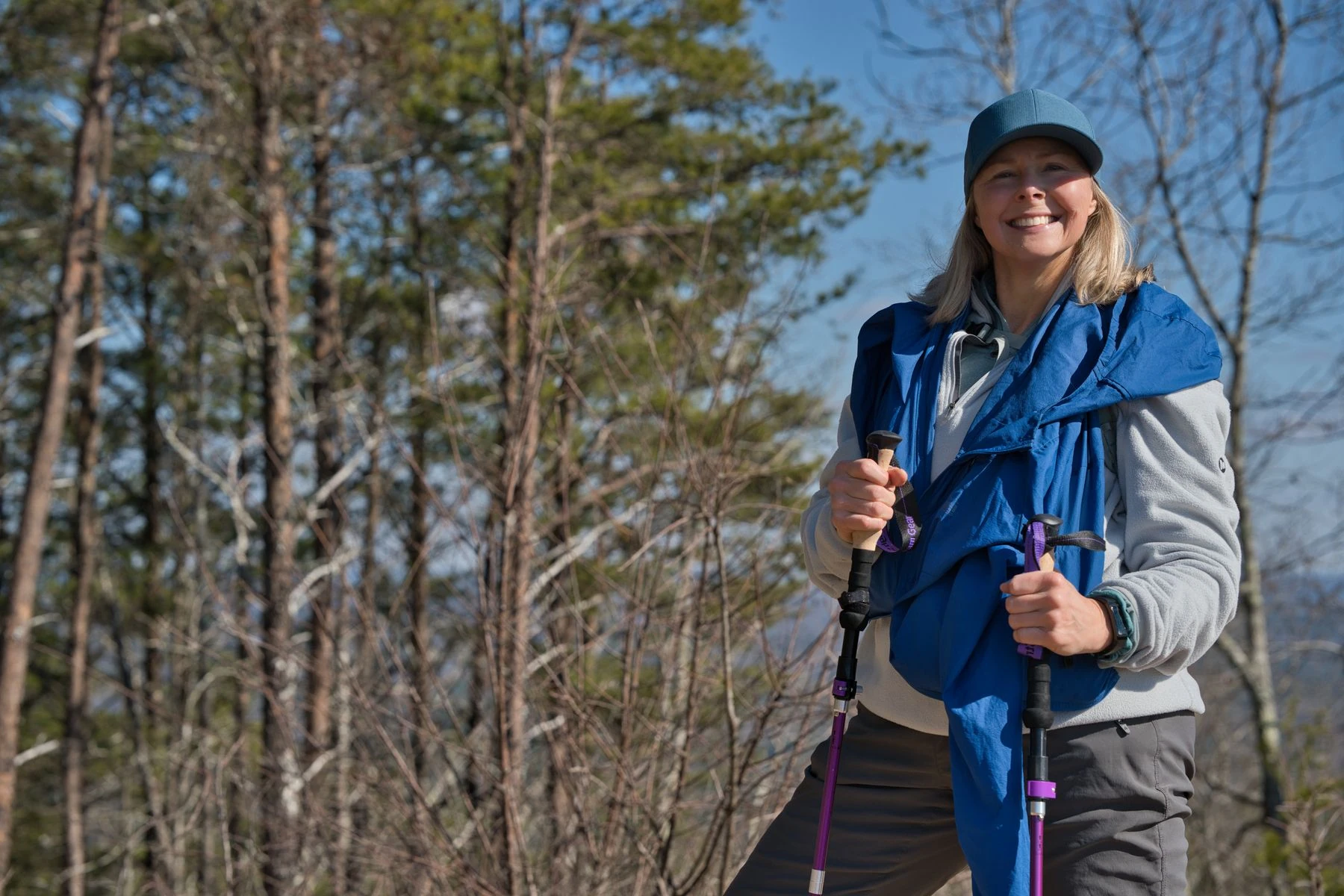
On an uphill path, poles give your arms something to contribute. Shorten them slightly if your hands are rising too high, then plant them near your feet and push gently as you walk. Many people enjoy the steady, alternating rhythm: pole, foot, pole, foot. It can be especially welcome when the climb continues longer than expected.
Poles are not a source of free energy. A study of 14 mountain runners on very steep treadmill slopes found lower perceived effort at several inclines with poles, while the measured energy savings were small. Your usual trail, speed, and experience may feel different. If the poles make your shoulders tense or force you into an unnatural stride, loosen your grip, adjust the length, or carry them for a while.
There may be a benefit after a demanding day, too. In one mountain-walking study, physically active participants using poles reported less muscle soreness 24 and 48 hours after the trek than those walking without them. That finding is encouraging, though it cannot tell you exactly how you will feel after your own route. Distance, elevation, pack weight, and how often you walk all play a part.
You can use them for only part of the walk
Some of the best pole users put them away when the path no longer calls for them. On a smooth, level route, you may prefer relaxed arms and free hands. On a narrow path shared with other walkers, swinging pole tips need more care. When you need your hands to climb a short scramble, use a railing, or handle a camera, secure the poles to your pack before moving on.
One pole can be convenient if you want a free hand. A pair gives you an alternating rhythm and two points of contact, especially on a descent. Neither choice needs to become a rule. The right answer is the one that helps on your route without getting in your way.
Poles also need a little practice. Check that every section is locked before you lean on a grip. Use a tip suited to the surface and follow local trail guidance. If a pole catches between rocks, stop and free it rather than pulling hard sideways. Trekking poles are trail equipment; they are not designed to replace a medical walking aid or support your full body weight.
Try the difference on a familiar route
If you are unsure whether poles are worth carrying, take them on a short walk you already know. Choose a route with a level start, a gentle climb, and a manageable descent. That gives you a fair chance to notice what changes without also learning a new trail.
- Set the length on level ground. With the tip beside your foot, start with a relaxed elbow bend of roughly 90 degrees. Keep every section within its marked range.
- Walk naturally for a few minutes. Let each pole follow the opposite foot. Hold the grips lightly; you should not have to squeeze them to feel in control.
- Adjust for the slope. Shorten a little for a sustained climb and lengthen a little for a sustained descent. Small changes are enough to test what feels comfortable.
- Notice the whole experience. Did you feel more settled over uneven ground? Was the descent easier to manage? Did the grips, straps, or weight bother your hands or shoulders?
If the answer is mostly yes, poles may have earned a place in your kit. If the route felt no different, or the poles were in your way, that is useful information too. Try a different setting or route before deciding.
When you are ready to compare designs, our guide to choosing trekking poles explains fit, locks, grips, and packed size in everyday terms. Our Carbon Fiber Trekking Poles are one packable option; check the working length and grip against the walk you want to take.
What the evidence does and does not say
The studies linked above measured balance on a platform, joint loading on a downhill ramp, effort on steep treadmill climbs, or recovery after one mountain trek. Most involved small groups of young or experienced participants. They support specific possible benefits, but they do not prove that poles prevent falls, cure knee pain, or make every walk easier. This article was checked against those original studies on October 4, 2026 and is meant to help you decide what to try on your own walks.
The most useful result is the one you can feel and repeat: a step that feels more settled, a descent you can take at your pace, or a pair of poles you are glad you brought along.